


MobileTrader
MobileTrader: platform dagangan di hujung jari!
Muat turun dan mulakan sekarang!

 05.10.2026 07:56 AM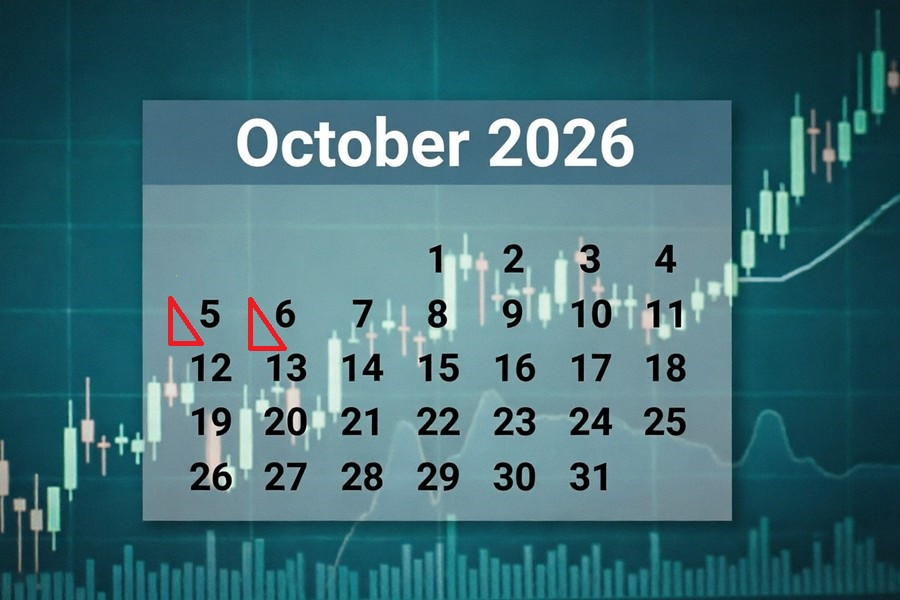
G7 countries agree to immediate release of 100 million barrels from IEA emergency reserves
The Group of Seven has agreed to the immediate release of 100 million barrels of diesel and crude oil from the International Energy Agency's emergency reserves. The release is designed to cover about four months of supply, with the bulk of diesel volumes hitting the market within the first 20 days. The emergency interventions were coordinated in response to a new wave of escalation in the Middle East: Yemeni Houthi forces launched ballistic missile and drone attacks on Saudi Aramco facilities in Riyadh and in the area of the Khurais oilfield, triggering large fires. In response, Saudi Arabia and Yemen's internationally recognized government announced a major military operation against the Houthis aimed at weakening their control over the Red Sea and restoring shipping through the Bab al?Mandeb strait.
OPEC+ core seven extend output caps for November
The seven key OPEC+ countries (Saudi Arabia, Russia, Iraq, Oman, Kuwait, Algeria, and Kazakhstan) decided at their monthly online meeting to extend ongoing production restrictions unchanged for November. High gasoline and diesel prices have boosted electric vehicle demand — Tesla Inc. and Rivian Automotive Inc. reported third-quarter sales above analysts' expectations. Nvidia's market capitalization pushed toward $6 trillion as the company's shares hit new record highs. At the same time, the US logistics sector faces acute distress: in less than a month, 16 US trucking companies filed for bankruptcy after the average price of diesel surged to a record $6.53 per gallon (a 17% rise since late August).
Dismal Nonfarm Payrolls for September
US payrolls rose by just 29,000 in September 2026, well below market expectations. In addition to the weak September print, the Bureau of Labor Statistics revised earlier months sharply downward:
Employment dynamics across major industries were largely unchanged month?to?month.
Fed rhetoric splits — from a pause in October to calls for a 50 bps further hike
The complex macroeconomic picture has produced divergent views within the Federal Reserve. Chicago Fed President Austan Goolsbee and Vice Chair Philip Jefferson said the Fed may pause after September's increase — i.e., leave the funds rate unchanged in October while assessing incoming data. New York Fed President John Williams also saw no rush to move again, though he still considers another rate hike likely closer to year-end.
By contrast, Dallas Fed President Lori Logan described September's move as only a first step and argued that policy likely needs at least another 50 bps of tightening to bring inflation back to 2%. Minneapolis Fed President Neel Kashkari incorporated one additional hike in both 2026 and 2027 into his baseline. Fed Governor Lisa Cook highlighted supply shock risks from geopolitics and warned that the AI investment boom could itself become an additional inflationary driver in 2027 because of massive capex and capacity constraints.
Markets: risk assets rally on weak jobs data, dollar supported by geopolitics and yields US stocks rose on Friday after weak US nonfarm payrolls eased investor fears of further Fed tightening. At the same time, the conflict around Iran and renewed increases in inflation expectations continue to provide fundamental support for the US dollar. Michael Hartnett, chief investment strategist at Bank of America, advises investors to avoid risky assets until the greenback shows clearer signs of stabilization after its recent rally. BofA emphasizes that market uncertainty will persist while Treasury yields remain at multi-year highs and recommends using this period to increase bond allocations in portfolios.
Oct 5, 01:00 / Australia / S&P Global Services PMI (final) for September / prev.: 53.6 / actual: 53.2 / forecast: 51.4 / AUD/USD – down
Australia's services business activity index for August eased to the weakest growth pace since early summer. The sector was affected by:
Analysts expect further slowing in services growth in September. Cooling activity will weigh on the Australian dollar.
Oct 5, 03:30 / Japan / S&P Global Services PMI (final) for September / prev.: 51.2 / actual: 52.5 / forecast: 51.6 / USD/JPY – up
Japan's services PMI rose in August to its best reading since early spring. The sector showed:
Analysts expect a moderation in services expansion in September. Slower momentum would weaken the yen.
Oct 5, 08:00 / Japan / Consumer Confidence Index for September / prev.: 34.9 / actual: 35.5 / forecast: 35.3 / USD/JPY – up
Japan's consumer confidence index rose in August to its strongest level since late winter, helped by improved assessments of population health and a higher readiness among households to make big purchases, alongside a modest easing in optimism about incomes and hiring. Markets expect a slight pullback in confidence in September. Softer household sentiment would weigh on the yen.
Oct 5, 10:55 / Germany / S&P Global Services PMI (final) for September / prev.: 49.8 / actual: 49.7 / forecast: 52.5 / EUR/USD – up
Germany's services PMI for August showed a modest contraction, driven by:
Markets expect a strong return to growth in services in September. A recovery in the sector would support the euro.
Oct 5, 11:30 / United Kingdom / S&P Global Services PMI (final) for September / prev.: 52.1 / actual: 52.5 / forecast: 51.7 / GBP/USD – down
The UK services PMI rose in August and held resilient positions, supported by demand for tech services. Growth was constrained by budgetary limits and geopolitical uncertainty, weaker export sales and softer employment, and rising input costs due to high fuel prices. Analysts expect services growth to ease to three-month lows in September. Cooling activity would weigh on the pound.
Oct 5, 12:00 / Eurozone / Producer Prices (Aug) / prev.: 4.6% / actual: 5.8% / forecast: 8.3% / EUR/USD – up
Eurozone producer prices accelerated in July toward three-year highs, reflecting much stronger inflationary pressure than the long-run average and a continued trend of rising industrial production costs. Analysts expect further rises in producer prices in August. Stronger PPI would support the euro.
Oct 5, 16:30 / Canada / S&P Global Services PMI (final) for September / prev.: 49.1 / actual: 46.8 / forecast: 47.5 / USD/CAD – down
Canada's services activity for August weakened, reflecting trade uncertainty and geopolitical pressures. The sector experienced the largest drop in activity and new business since late winter, a decline in business optimism amid high energy prices, softer selling prices due to weak competition, and stable employment after two months of gains. Markets expect the pace of decline to moderate in September; a smaller slowdown would support the Canadian dollar.
October 5, 16:45 / US / S&P Global Services PMI (final) for September / prev.: 54.6 / actual: 56.5 / forecast: 58.7 / USDX (6-currency USD index) – up
The US services business activity index for August showed strong expansion. The sector was supported by:
Analysts expect further acceleration in the services PMI to multi-year highs in September. Stronger activity in services will support the US dollar.
Oct 5, 17:00 / US / ISM Services PMI for September / prev.: 54.1 / actual: 55.4 / forecast: 55.7 / USDX – up
The ISM services index for August recorded the fastest pickup in six months. The report showed:
Analysts expect the ISM services PMI to continue rising in September. Faster services expansion will support the greenback.
Oct 6, 02:30 / Australia / Westpac Consumer Sentiment (Oct, leading) / prev.: 6.0% / actual: -5.2% / forecast: -1.2% / AUD/USD – up
Australia's Westpac consumer-sentiment index for September fell sharply amid higher fuel prices and rising rate risk. The deterioration reflected a sharp drop in perceived financial conditions over the past year, weaker one-year and five-year economic expectations, and a fall in willingness to make major purchases as unemployment expectations rose. Analysts expect a much smaller drop in October. A moderation of pessimism would support the Australian dollar.
Oct 6, 01:30 / Australia / ANZ-Indeed Job Ads (Sep) / prev.: 1.9% / actual: 2.5% / forecast: -1.3% / AUD/USD – down
ANZ-Indeed job ads for August accelerated to the highest level since February, driven by seasonal hiring ahead of holidays in retail and hospitality, remaining well above the long-run average, with a small fall in tech vacancies. Analysts expect job ads to fall in September; weaker labour demand would pressure the AUD.
Oct 6, 09:00 / Germany / Factory Orders (Aug m/m) / prev.: 3.7% / actual: 2.5% / forecast: -0.9% / EUR/USD – down
German factory orders rose for the third month in July, led by large contracts in shipbuilding, aerospace and rail-car manufacturing, stronger domestic demand offsetting weaker foreign orders, and declines in autos and consumer goods. Markets expect orders to fall in August. Softer industrial demand would weigh on the euro.
Oct 6, 10:30 / Eurozone / Construction PMI (S&P Global, final) for Sept / prev.: 44.3 / actual: 43.0 / forecast: 43.0 / EUR/USD – volatile
Eurozone construction activity worsened in August, accelerating the decline. The sector showed sharp falls in residential and commercial building, the fastest new order declines since spring, faster job cuts and weaker purchasing activity, and easing price pressures amid continued business pessimism. Analysts expect construction PMI to remain low in September.
Oct 6, 10:30 / Germany / Construction PMI (S&P Global, final) for Sept / prev.: 42.1 / actual: 48.7 / forecast: 48.0 / EUR/USD – down
Germany's construction PMI jumped in August, showing the smallest decline since the start of the year. The report showed renewed growth in commercial building and a slowing residential downturn, continued weakness in civil engineering due to high costs and financing, and accelerating staff reductions amid rising input costs. Analysts expect some easing in September. A weakening construction sector would pressure the euro.
Oct 6, 11:30 / UK / Construction PMI (S&P Global, final) for Sept / prev.: 44.7 / actual: 44.3 / forecast: 45.4 / GBP/USD – up
UK construction activity fell in August on weaker demand and higher borrowing costs, with declines across residential, civil and commercial building, staff cuts and rising input-cost inflation due to higher fuel, materials and logistics prices. Markets expect the downturn to ease and construction activity to pick up, which would support the pound.
Oct 6, 12:00 / Eurozone / Retail Sales (Aug m/m) / prev.: 1.4% / actual: 0.6% / forecast: 0.5% / EUR/USD – down
Eurozone retail sales growth slowed in July to the weakest pace in two years, as households pulled back. June data were revised up, but spending momentum eased. Analysts expect further deceleration in August. A cooling consumer sector would weigh on the euro.
Oct 6, 15:15 / US / ADP 4-week average jobs change / prev.: 16.25k / actual: 20.0k / USDX – volatile
The 4-week average of private sector job gains accelerated, showing faster hiring compared with earlier periods and confirming labour market resilience. No official forecast is published; focus remains on upcoming reports. Continued momentum in hiring would support the dollar.
Oct 6, 15:30 / Canada / Trade Balance (Aug) / prev.: 4.20bn / actual: 0.77bn / forecast: 1.30bn / USD/CAD – down
Canada's trade surplus narrowed sharply in July as exports shrank — crude oil down 5.6%, natural gas down 14%, and minerals — and exports to the US fell 6.6% while shipments to the EU and China rose. Imports rose on vehicle and non-ferrous metal purchases. Analysts expect the surplus to widen in August; a recovery would support the Canadian dollar.
Oct 6, 15:30 / US / Trade Balance (Aug) / prev.: -71.2bn / actual: -88.6bn / forecast: -89.8bn / USDX – down
The US goods and services deficit widened in July to the largest since spring 2025 as exports fell 2.1% (including oil and non-monetary gold) while imports rose 2.8% driven by computers, parts and semiconductors. Deficits widened with Mexico, Vietnam, Taiwan, and China. Further expansion of the trade gap would weigh on the dollar.
Oct 6, 17:00 / Canada / Ivey PMI (Sep) / prev.: 55.1 / actual: 64.3 / forecast: 65.2 / USD/CAD – down
Canada's Ivey PMI jumped to the highest level since spring 2022, ending two months of negative momentum and lifting activity to multi-year highs. Employment rose to 55.0, inventories increased, and price pressures accelerated amid persistent supply delays. Analysts expect purchasing managers' activity to remain strong, supporting the Canadian dollar.
Oct 6, RealClearMarkets/TIPP Economic Optimism (Oct, leading) / prev.: 45.1 / actual: 45.6 / forecast: 44.5 / USDX – down
US economic optimism rose in September to a spring high, reflecting stronger confidence among higher-income households, improved six-month economic expectations despite a slight dip in personal finances, and rising trust in economic policy. Analysts expect optimism to ease next month; lower consumer confidence would pressure the dollar.
Oct 6, 23:30 / US / API Crude Stocks for week to Sept 25 / prev.: 1.786m / actual: 1.019m / Brent – volatile
US commercial crude inventories rose by 1.019 million barrels for the week. Highlights: continued builds at storage hubs, an 800k-barrel release from the SPR, a 2.99m-barrel gasoline build offset by lower distillates, and production steady at 13.94m b/d. Inventory builds will keep pressure on Brent.
Scheduled speeches (selected): Oct 5, 10:45 / Eurozone / Joachim Nagel, ECB Executive Board — EUR/USD
Oct 5, 11:00 / Eurozone / Philip Lane, ECB Governing Council — EUR/USD
Oct 5, 12:00 / Eurozone / Isabel Schnabel, ECB Executive Board — EUR/USD
Oct 5, 14:45 / Eurozone / Sharon Donnery, ECB Supervisory Board — EUR/USD
Oct 5, 17:15 / Eurozone / Claudia Buch, ECB Single Supervisory Board — EUR/USD
Oct 6, 09:35 / Japan / BOJ Governor Kazuo Ueda — USD/JPY
Oct 6, 11:30 / UK / Catherine Mann, BoE MPC — GBP/USD
Oct 6, 12:10 / Eurozone / Sharon Donnery, ECB Supervisory Board — EUR/USD
Oct 6, 14:40 / Eurozone / Claudia Buch, ECB Single Supervisory Board — EUR/USD
Oct 6, 16:00 / Eurozone / Piero Cipollone, ECB Executive Board — EUR/USD
Oct 6, 16:00 / Eurozone / Frank Elderson, ECB Executive Board — EUR/USD
Oct 6, 16:05 / US / New York Fed President John Williams — USDX
Oct 6, 17:45 / US / Fed Governor Michelle Bowman — USDX
Comments from central bank officials can drive FX volatility as they signal policy intentions.
MobileTrader: platform dagangan di hujung jari!
Muat turun dan mulakan sekarang!
Anda telah pun menyukai siaran hari ini
* Analisis pasaran yang disiarkan di sini adalah bertujuan untuk meningkatkan kesedaran anda, tetapi tidak untuk memberi arahan untuk membuat perdagangan.
 E-mel untuk penulis kandungan analitik teks dan video: content-authors@instaforex.com


